

Orangeburg Pipe Replacement Tampa FL. Orangeburg sewer pipe. Common in mid-century Tampa homes. Collapses from the inside. Trenchless replacement minimizes yard damage.
Read the transcript ▼
hi I'm Corbin with Titan Plumbing electric and we're going to tell you a little bit about what we're doing out here today so first thing we did was come out to this job and Camera the line discovered it was orange birg talked to the owners and decided that it needed to be replaced so then we dug the trench and pulled out the orange birg piping so as we were digging the trench to remove the orange birg pipe we realized that the pipe came underneath an auxiliary driveway so we had to come out here get a wet saw cut the concrete so we could continue moving the pipe all the way down to the city so now that all the orange BG was removed and the driveway was cut we replaced the entire system with PVC the home is now ready to be used for plumbing and we are just waiting for inspection to be completed and we can back fill the ditch if you're experiencing any plumbing problems especially in an older home please give us a call at 813 93381 0 or visit our website Titan plumbing and electric.com
Sewer Line Repair in Tampa, FL
Sewer line repair in Tampa usually starts with a drain that keeps clogging. Every toilet, tub, and sink in the house empties into one pipe, the lateral, which runs under the yard to the city or county main. When that pipe cracks, sags, or fills with roots, no amount of snaking keeps it open for long.
Titan has repaired sewer lines in Tampa since 1994, a lot of them clay and cast iron laterals under 1950s and 1960s block homes. We put a camera in the line before we talk about price, so you know whether you need a cleaning, a short section replaced, or a new pipe from the house to the street.
Signs You Need Sewer Line Repair in Tampa
One slow sink is usually a branch drain. The main sewer line shows itself when several fixtures act up at the same time, or when a clog comes back within weeks of being cleared.
- Two or more fixtures backing up together, often the lowest toilet and tub first
- A toilet that gurgles or bubbles when the washer drains or the shower runs
- Sewage coming up in a tub, shower, or floor drain
- The same clog returning after a cable or a jet, especially after heavy rain
- A sewer smell outside near the cleanout or along the path of the pipe
- A soggy strip in the lawn, or grass that stays greener over one line
- A sinkhole or depression in the yard, driveway, or walkway over the lateral
Why Sewer Lines Fail in Tampa
Most of the sewer laterals we open in Tampa fail for one of a handful of reasons, and the age of the house predicts a lot of it.
- Clay tile. Common under homes built before PVC took over. The pipe itself lasts, but the joints open as the ground moves, and roots and sand get in.
- Orangeburg. A tar-and-fiber pipe used in some mid-century neighborhoods. It softens and goes oval with age, and eventually collapses. It cannot be cleaned back into shape.
- Cast iron. The inside scales up, and the bottom of the pipe rots out in a channel along its length. From the top it can look fine while the floor of the pipe is gone.
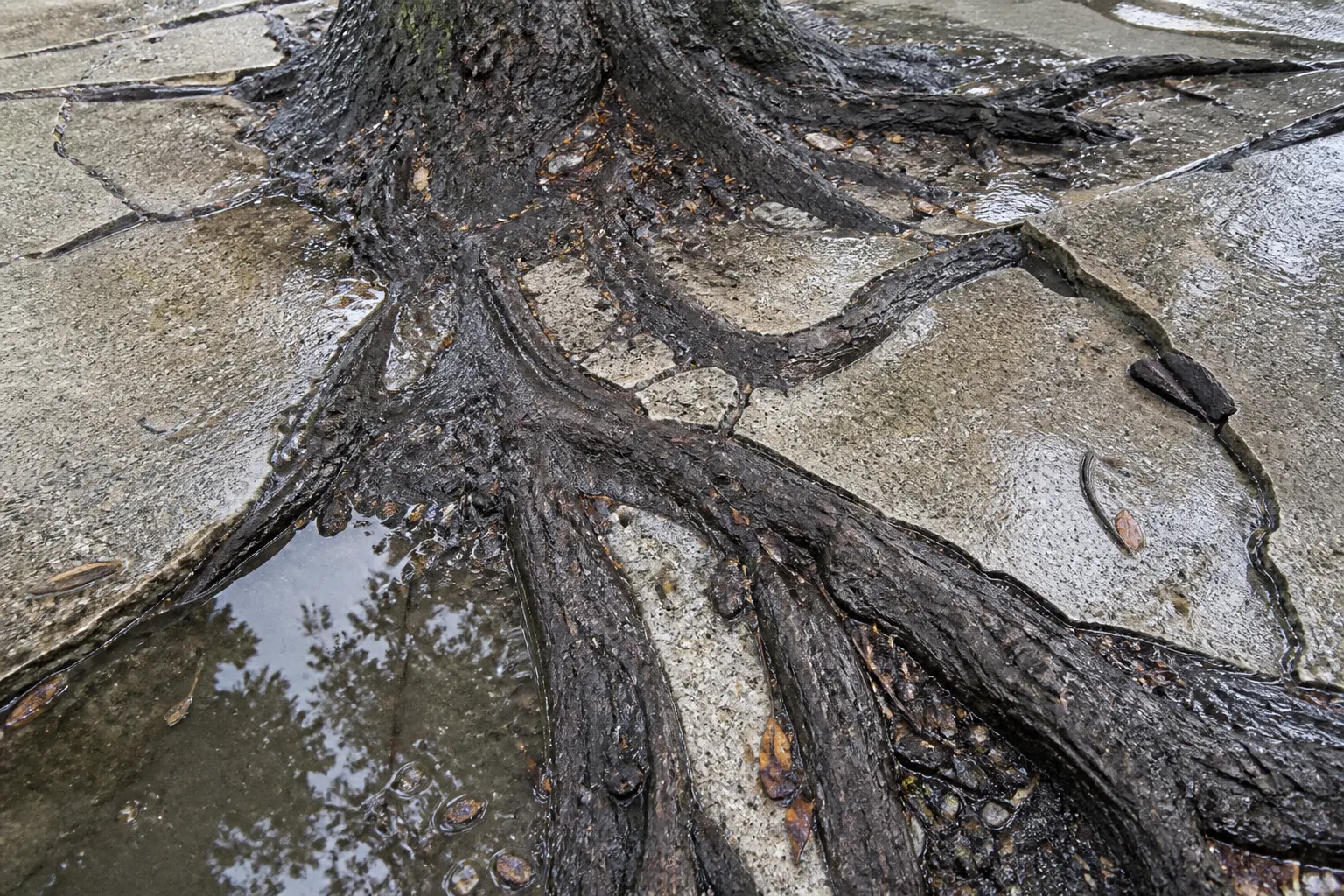
- Live oak and laurel oak roots. They follow moisture to any open joint or crack and fill the pipe with a root mass that catches paper and grease.
- Bellies. Sandy soil settles under the pipe, a section sags, and water and solids sit in the low spot instead of draining.
- Grease. Cooking fat cools and hardens on the pipe wall, narrows it, and gives everything else a place to stick.
Sewer Camera Inspection and Locating
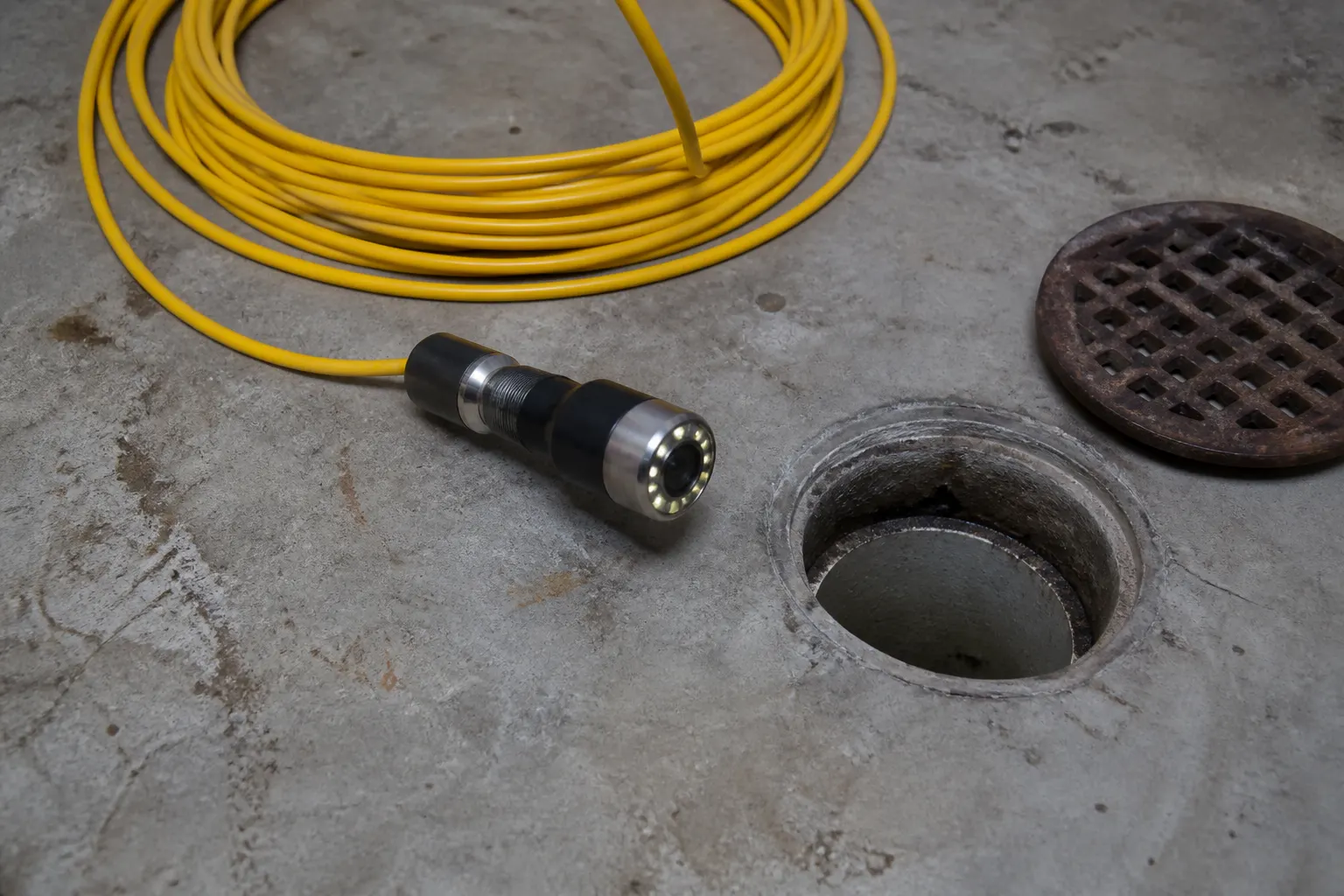
We go in through the cleanout, or pull a toilet if there isn't one, and push a camera from the house toward the main. The camera shows the material, every joint, and every defect, along with the distance from the entry point.
A locator picks up a signal from the camera head so we can mark the exact spot on the ground and estimate its depth. That mark is what makes a point repair possible: we dig one hole over the break instead of trenching the yard to find it.
You get to watch the footage with us, and we tell you what each defect means. If the line only needs cleaning, we'll say so. A camera inspection also makes sense before you buy an older Tampa home, and after any second backup in a year.
Point Repair for One Bad Section
When the camera finds a single failure, like one cracked joint, a root-packed offset, or a short collapsed stretch, and the rest of the pipe is sound, we dig over that spot, cut out the bad piece, and splice in new PVC with proper couplings.
It's the smallest repair available and often the least expensive. It's the wrong choice when the camera shows failing joints every few feet, because you'd be paying for the next point repair soon after.
Pipe Lining (CIPP) Without Trenching
Cured-in-place pipe lining puts a resin-soaked liner inside the old pipe. It's inflated against the walls and left to harden, which leaves a new seamless pipe inside the old one. Joints are sealed, so roots lose their way in.
Lining works when the old pipe still holds its shape: cracked clay, root-invaded joints, and pitted cast iron are good candidates. It won't fix a belly, because the liner follows the sag, and it can't go through a section that has already collapsed. Access is usually through the existing cleanout, so the yard stays mostly intact.
Pipe Bursting to Replace the Line
Pipe bursting replaces the lateral by pulling a new pipe through the old one. A bursting head breaks the old clay or cast iron outward into the soil while the new pipe follows behind it. It takes a pit at each end of the run instead of a trench between them.
We reach for bursting when the old pipe is too broken to line and the route from house to main is clear. Lines that run tight against a foundation or other utilities, or that sag, are better dug.
Open-Cut Excavation When Trenchless Will Not Work
Sometimes digging is the right answer. A belly has to be dug up and re-bedded to fix the slope. A fully collapsed run can block both a liner and a bursting head. Very shallow lines, and lines that need a new cleanout or a new tie-in, are often faster to dig.
With open cut we expose the pipe, replace it with PVC at the correct slope, bed it, and backfill. It's more disruption, but it's the only method that corrects the grade, and we'll tell you up front when that's the case.
Who Owns Which Part of the Sewer Line
In most of Tampa Bay, the homeowner is responsible for the private lateral, from the house to where it meets the public system. The utility owns the main in the street or easement. Many homes have a cleanout near the property line that marks the handoff, but the exact split varies by utility, so we confirm it for your address.
If the camera shows the problem past your side, at the tap or in the main, we document it so you can report it to the utility instead of paying for its repair.
Permits, Inspection, and Putting the Yard Back
Replacing or relining a sewer lateral generally needs a plumbing permit from the local building department, whether that's the City of Tampa, Hillsborough County, Pasco County, or a Pinellas jurisdiction. We pull the permit and schedule the inspection, and the pipe stays open until it passes.
After that we backfill and compact the ground. If the repair runs under a driveway, walkway, or paver patio, the quote spells out what we cut, what we patch, and what's left for you or your landscaper. Small access pits from lining or bursting leave far less to restore than a trench.
Sewer Line Repair Cost in Tampa
HomeAdvisor's 2026 cost guide puts sewer line replacement between $1,388 and $5,323 nationally, with an average of $3,319. The same guide lists CIPP lining at $90 to $250 per foot, pipe bursting at $60 to $200 per foot, and a video sewer inspection at $100 to $500. Those are national figures, not a Titan price.
What moves the number on a Tampa job is the length and depth of the run, the method the camera points to, what sits on top of the pipe (lawn, pavers, a driveway, a slab), and the permit. Titan quotes a flat rate after the camera, before work starts.
If you're a Pinellas County Utilities sewer customer in a single-family home, the county's Private Sewer Lateral rebate program has offered 100% of an inspection up to $350 and 50% of a repair, replacement, or lining up to $3,500, once per property and while funds last. Check eligibility with the county before work begins.
What to Do During a Sewer Backup
Stop running water. That means no flushing, no showers, no dishwasher or washer, because everything you send down comes back up at the lowest drain.
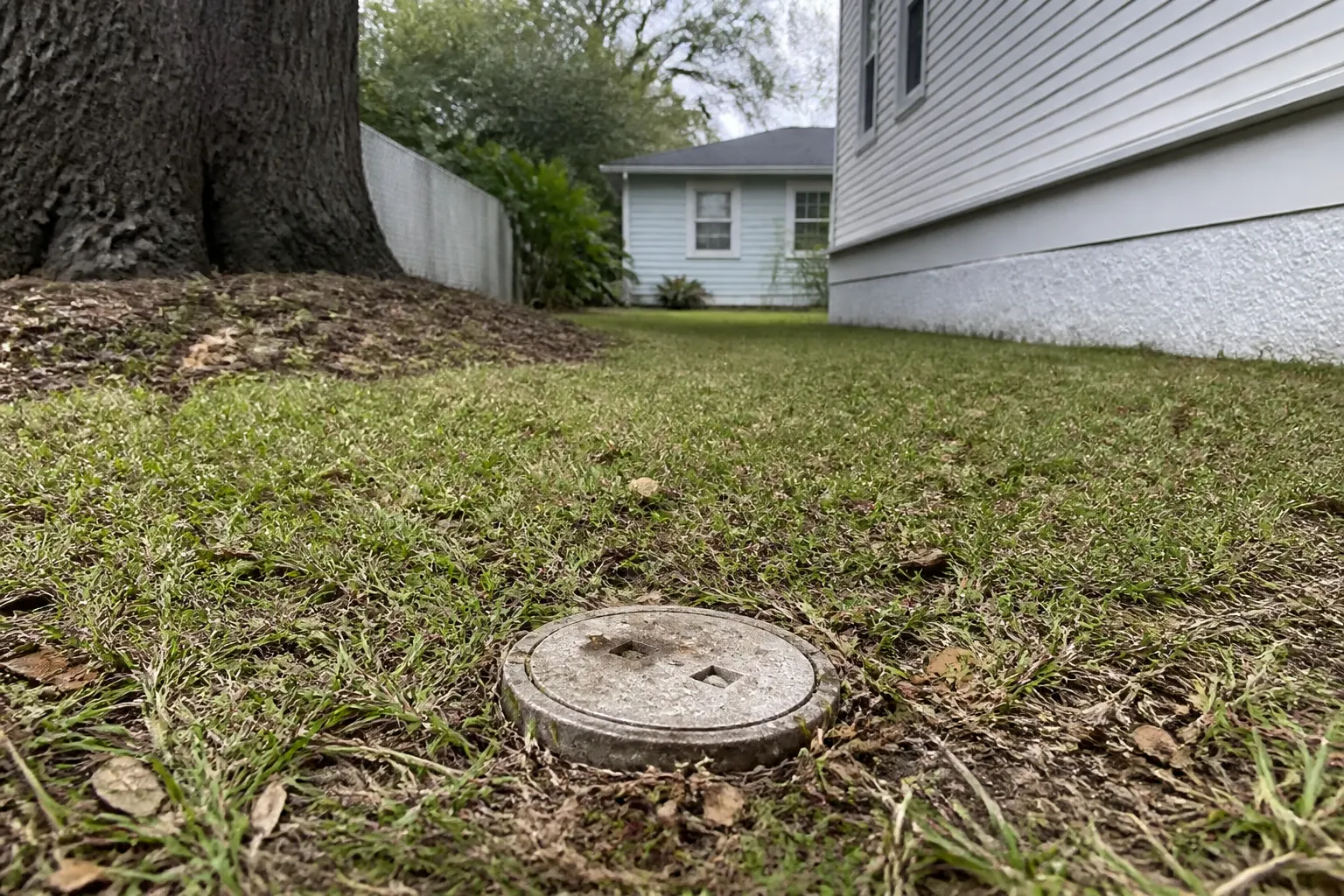
- If you know where the outdoor cleanout is, loosen the cap carefully. Sewage may spill there instead of inside the house.
- Keep kids and pets away from the water, and stay off wet floors near outlets or cords.
- Don't pour chemical drain cleaner into a backed-up line. It won't reach the blockage and it makes the work dangerous for whoever opens the pipe.
- Take photos for your insurer, then call (813) 933-8010. We work Monday through Saturday, same-day when the schedule allows.
Keeping a Repaired Line Clear
On an older clay or cast iron lateral that isn't being replaced yet, regular root maintenance buys time. Cutting roots out before they fill the pipe is cheaper than clearing a full blockage.
Hydro jetting scours grease, scale, and fine roots off the pipe wall, which a cable can't do. It suits a sound pipe. On thin cast iron or soft Orangeburg, we look with the camera first, because a jet can break through a pipe that's barely holding. After a liner or a new PVC run, keep wipes and grease out of the drains and the line should need very little.
More from the field

Orangeburg Piping And Why It Should Be Replaced. Mid-century Orangeburg sewer pipe collapses from the inside. How we replace it trenchless.
Read the transcript ▼
hey I'm Corbin with Titan Plumbing and Electric and today we're here to talk about orange BG piping and why it must be replaced orange BG piping was first starting to be installed in the late 1800s it is a composite material combined of old wood chippings and tar so the longevity of these pipes is not great it was said to last 50 years but odds are you might only get 30 years out of it the problem with these pipes are is that they're soft they compress they also get holes in them this can lead the clogs down the line in the future of your home the best way to find out if you have orange Berg piping is to have a plumber come out and Camera your line so we can identify the type of piping if we do find Orange Berg piping it is highly recommended that we replace it if you're experiencing Plumbing issues give us a call at 813 93381 0 or visit our website Titan plumbing and electric.com