
Level 2 EV Charger Installation in Tampa, FL
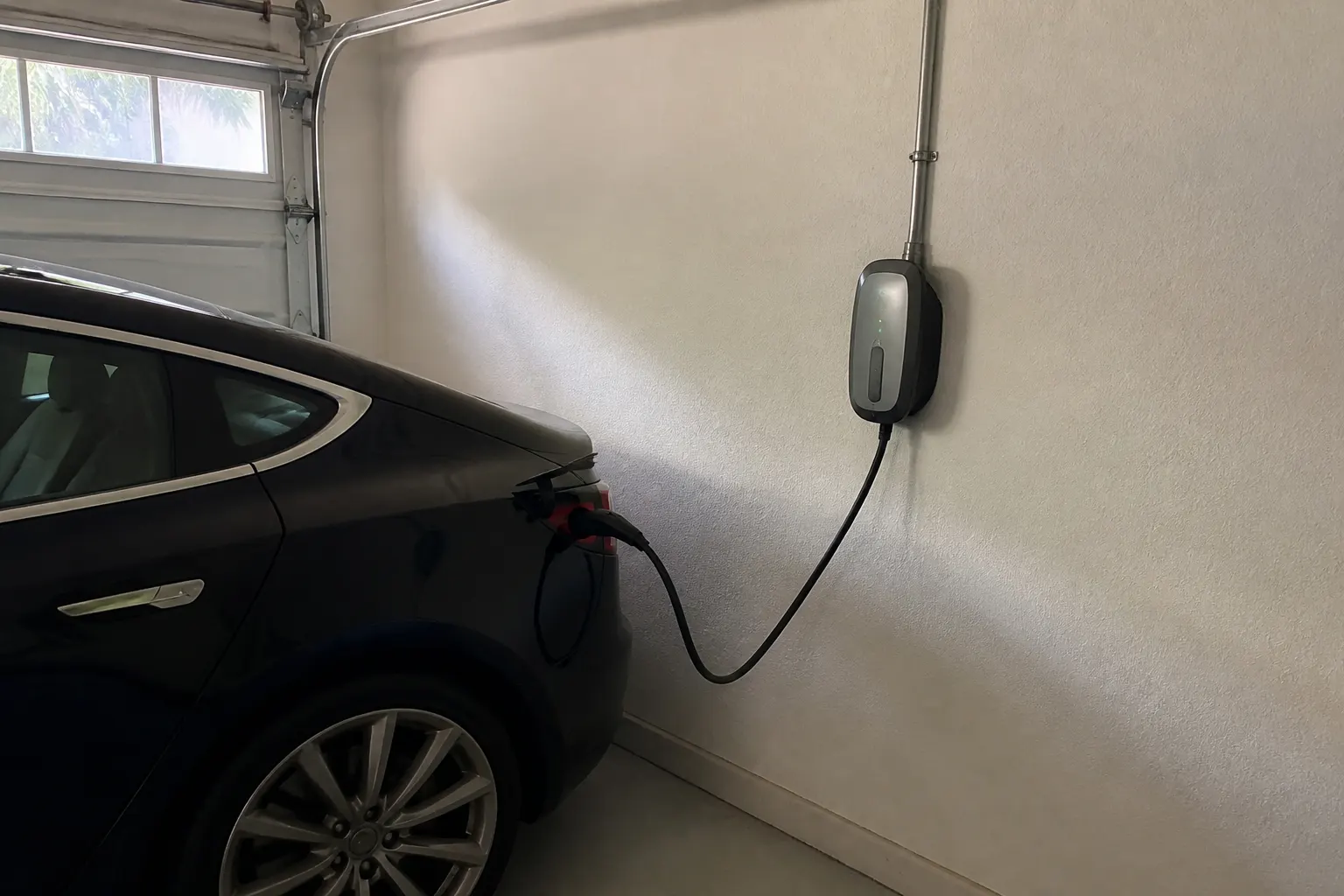
Plugging your electric vehicle into a standard wall outlet works, but it is painfully slow. A Level 2 home charger turns an overnight trickle into a full charge in roughly four to eight hours, so you wake up to a ready car every morning. Titan Plumbing & Electric installs EV charging stations for Tampa homeowners the right way: the breaker sized correctly, the circuit run cleanly, the unit mounted, and the permit pulled so the work is signed off and warranty-safe.
An EV charger is not a plug-and-play appliance. It is a high-amperage 240V circuit that has to be matched to your home's electrical capacity. Done wrong, it trips constantly or, worse, overheats. Our licensed electrician team has wired chargers for Tesla, Ford, Rivian, GM, and more across the bay, and we will tell you up front whether your panel can handle the load or needs a little help first.
Level 1 vs. Level 2 Charging
Almost every EV ships with a Level 1 cord that plugs into a regular 120V outlet. It is fine for a plug-in hybrid or very light driving, but it adds only a few miles of range per hour. For a daily driver, that is not enough. Level 2 charging is the standard most Tampa households actually want.
- Level 1 (120V): 3 to 5 miles of range per hour. Can take well over 24 hours for a full charge.
- Level 2 (240V): 20 to 40+ miles of range per hour, replenishing most EVs in a single evening.
- Level 2 runs on a dedicated circuit, the same class of wiring as an electric range, a dryer, or a tankless water heater.
- A hardwired Level 2 unit is cleaner and more weather-resistant; a plug-in unit on a 240V outlet keeps it portable.
Does Your Home Have Enough Power?
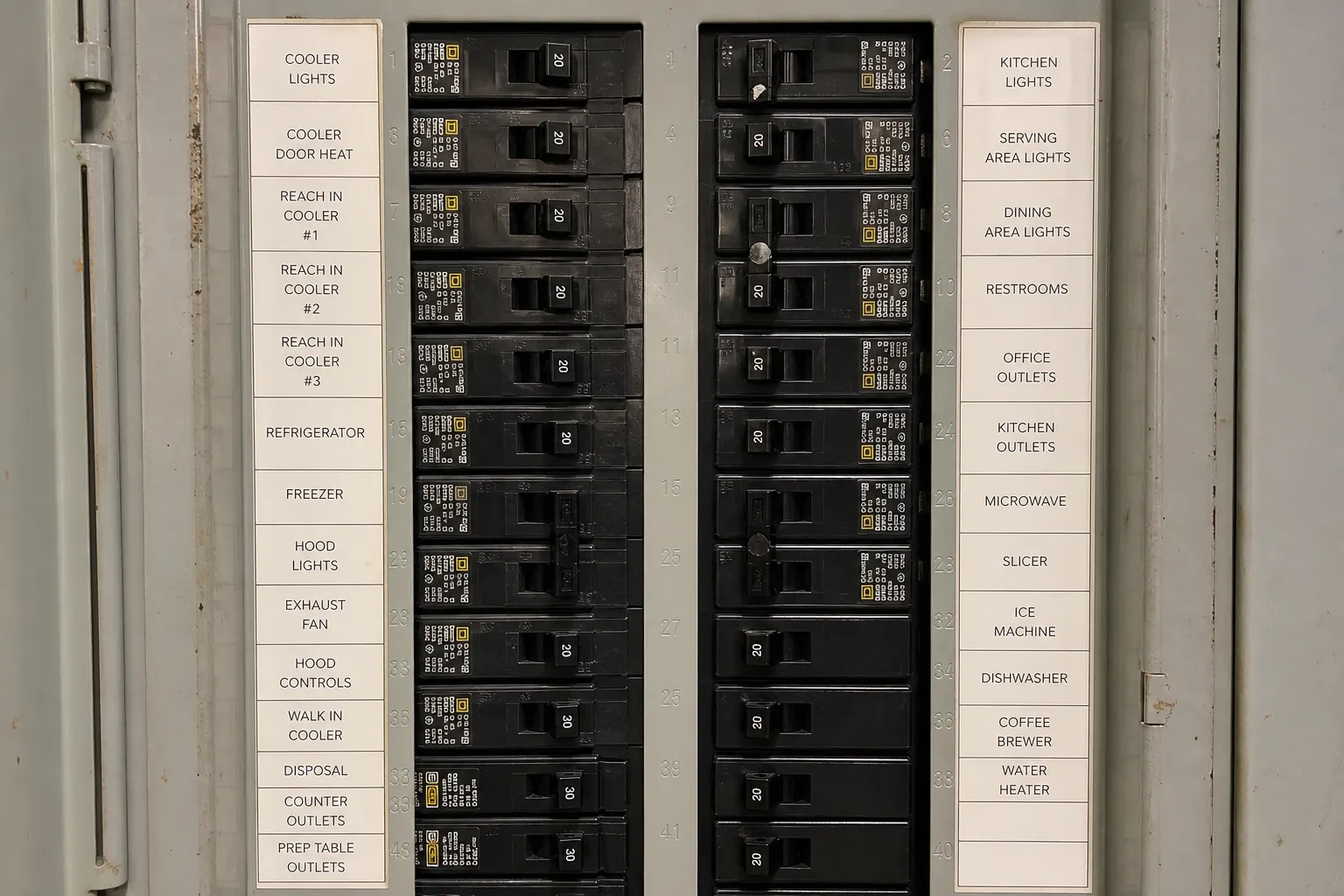
This is the question that makes or breaks an EV install, and it is the step DIY kits skip. A Level 2 charger can draw 40 to 60 amps, which is a large slice of a home's total capacity. Before we mount anything, we check what your existing electrical panel can spare once the AC, water heater, and everything else are accounted for.
If you are on an older 100-amp service, a charger may push you over the limit. In that case a panel upgrade to 200-amp service solves it and leaves room for the future. If you have capacity to spare, we simply add a dedicated breaker and circuit. Either way you get a straight answer and a flat-rate quote, never a guess.
Older homes sometimes hold surprises. If a quick safety inspection turns up aluminum wiring, a corroded panel, or undersized service, we flag it before it becomes a real hazard on a continuous high-amp load. Fixing the wiring repair first is far cheaper than chasing a tripping circuit later, and it keeps your charger and your insurance in good standing.
Our EV Charger Installation Process
A clean install is about planning the run, protecting the circuit, and passing inspection. Most home installs are finished in a few hours once the charger and location are set. Here is how our team handles it.
Chargers and Vehicles We Install For
We work with the major hardwired and plug-in Level 2 units, including the chargers automakers recommend and universal J1772 and NACS-compatible models. If you bought a charger with the car, we will install it. If you have not chosen one yet, we will help you pick a unit matched to your vehicle and driving habits.
- Tesla Wall Connector and Tesla Mobile Connector setups.
- Ford, Rivian, GM, Hyundai, Kia, and other J1772 / NACS vehicles.
- Universal smart chargers with Wi-Fi, scheduling, and load management.
- Outdoor-rated installs with weatherproofing for Tampa heat and rain.
Smart Charging and Off-Peak Savings
A Level 2 charger does more than charge faster. The smart units we install connect to Wi-Fi and an app, so you can schedule charging for overnight off-peak hours, track energy use, and set charge limits. In a Tampa summer, when the grid and your electric bill are both under strain, charging at 1 a.m. instead of 6 p.m. can make a real difference on the monthly statement.
Load management is the other piece. If your panel is close to capacity, a smart charger can automatically throttle its draw when the AC and other big loads are running, then ramp back up when there is room. That sometimes lets a home add a charger without a full service upgrade. We help you weigh a load-managed charger against a panel upgrade, and we are honest about which one your home actually needs rather than selling you the bigger job.
Permits, Code, and Why a Licensed Electrician Matters
A 240V charger is one of the largest continuous loads in a modern home, and Florida code treats it accordingly. A permitted, inspected install protects your warranty, your insurance, and your family. A handyman special that taps the wrong circuit or skips the permit can void coverage and create a genuine fire hazard.
Our crew installs to current code under Florida license EC13012958, adds surge protection at the panel when you want your charger's electronics shielded from Tampa lightning, and leaves the work documented and inspected. If you ever smell burning or see a sparking outlet near the charger, treat it as an emergency electrical situation and call us immediately.
EV Charger Installation Cost in Tampa
Most Tampa homes land between $1,200 and $1,800 for a complete Level 2 installation. The wider national range runs about $750 to $2,500, and Qmerit, a national EV installation network, put the 2026 average at $1,700. Where your home falls depends on three things: the charger you pick, how far the circuit runs from the panel, and whether your panel has capacity to spare.
A garage on the other side of the wall from the panel sits at the bottom of that range. A detached garage that needs trenching sits at the top. If the panel is full, a 200-amp service upgrade in the Tampa market runs $1,500 to $4,000, and older homes with outdoor panels trend high because of weatherproofing, grounding, and meter work. Before we quote an upgrade, we check whether a load management device can free up enough capacity instead, which is usually cheaper.
These are market ranges, not our price list. We quote a flat rate after we see your panel and the charger location, so the number you approve is the number you pay. The same crew can handle related electrical work on the same visit.
- Charger unit: $300 to $900, depending on brand and amperage
- Labor and permitting: $500 to $1,200
- Wire, conduit, and breaker: $200 to $500
- 200-amp panel upgrade, only if your panel needs it: $1,500 to $4,000 in Tampa
Hardwired vs. NEMA 14-50 Outlet
A Level 2 charger can be wired two ways: hardwired straight to the circuit, or plugged into a NEMA 14-50 outlet. Most homeowners assume the outlet is the cheaper option. It usually is not.
Code requires a GFCI breaker on a 14-50 outlet serving an EV, and that breaker runs $200 to $400 more than a standard double-pole. Hardwired chargers have GFCI protection built into the unit, so they work on a standard breaker. Hardwiring also delivers 48 amps continuous on a 60-amp circuit, where the 14-50 caps you at 40.
The outlet still makes sense if you want to unplug the charger and take it with you, or if the same receptacle will serve a welder or an RV. We install both and will tell you which fits your garage before you commit.
EV Charger Rebates and Tax Credits in Florida
The federal 30C credit that covered 30% of a home charger installation ended on June 30, 2026, so installations after that date no longer qualify. Tampa Electric does not offer a residential charger rebate either; its charger rebates go to commercial and fleet customers.
What is still available is TECO's EV time-of-use rate, which lowers the price of the power you use charging overnight. If you drive enough to charge most nights, that rate does more for your annual cost than any one-time rebate would have. Check the current rate directly with Tampa Electric before you enroll.
Related Upgrades While We Are There
An EV charger is rarely the only electrical upgrade a home needs, and combining work on one visit saves you money. While the crew is on site we can add a whole-house surge protector to guard the charger's electronics from Tampa lightning, install outdoor lighting for the driveway, wire hardwired smoke detectors, or take care of pool wiring out back. If your home is also storm-prone, a standby generator keeps that charger and the rest of the house running through an outage. We support local businesses too through our commercial electrical team.
Why Tampa EV Owners Choose Titan
We are family-owned and have served Tampa Bay since 1994, and our EV work carries the same standard as the rest of our electrical services. You get a licensed, insured crew, flat-rate pricing quoted up front, and an install that is permitted and inspected, not improvised.
- Licensed and insured Tampa electricians, family-owned since 1994.
- Correct breaker and circuit sizing, with a panel-capacity check before we quote.
- Permit and inspection handled, so your charger is code-compliant and warranty-safe.
- Backed by a 4.7-star rating across 300+ reviews and a 100% satisfaction guarantee.