
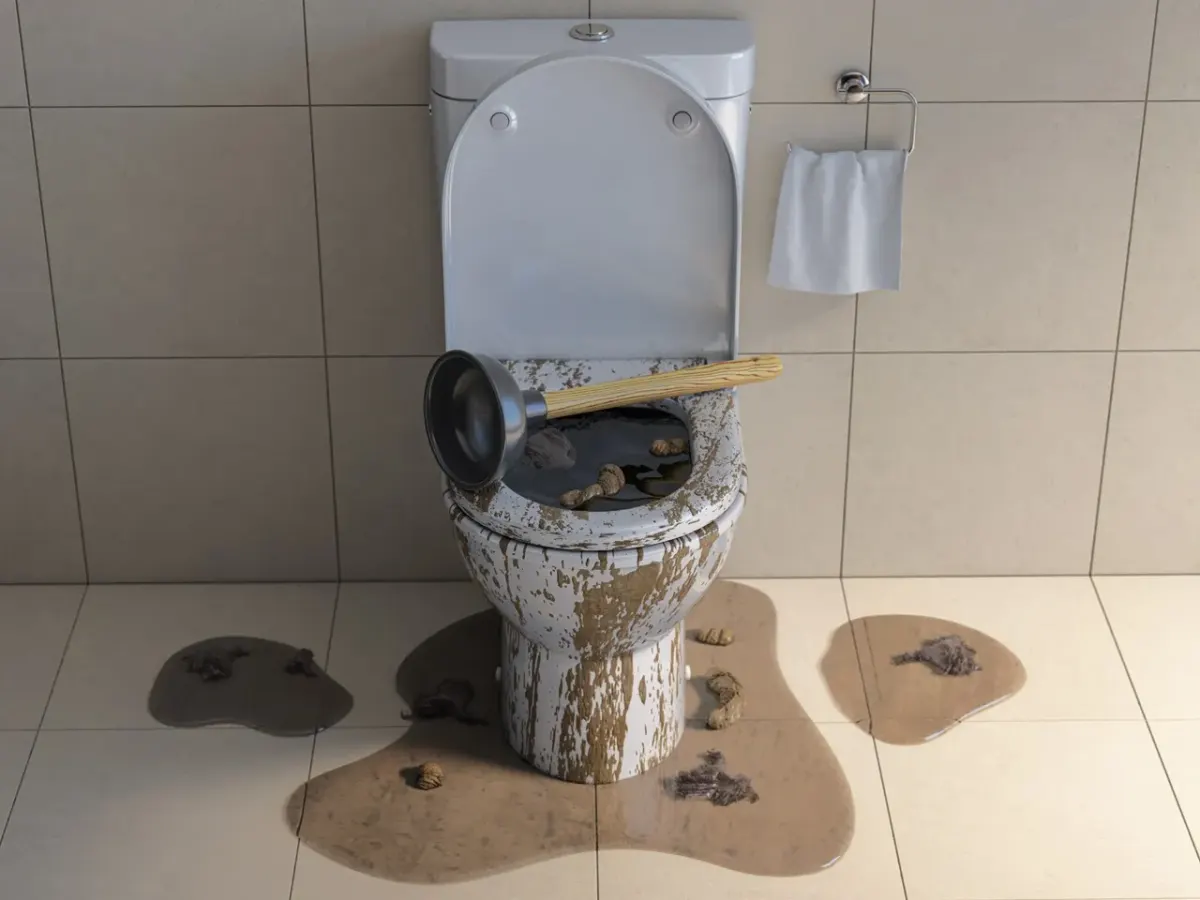
A first-floor toilet that keeps overflowing points to one stubborn trouble spot: the place where your home’s sewer line connects to the street main. Plumbers call that the lateral tap. Tiny roots slip in through hairline gaps at that joint. They catch paper, slow the flow, and grow into a dense mat. The first-floor bathroom sits closest to the main line, so it backs up first and most often. Tampa’s tree canopy, sandy soils, and long wet season make root growth fast and repeatable. This guide explains why it happens, how to spot the signs, what to do right now, and which repairs actually stop the cycle.
Why the lateral tap becomes the choke point
Roots hunt for moisture and oxygen. The lateral tap offers both. Older clay and cast-iron lines shift a bit over time. Gaskets dry, joints loosen, and a fine seep appears at the connection. Feeder roots sniff the seep, push through the gap, and set up shop. That wye fitting then turns into a strainer. Anything with texture, paper, wipes, even “disposable” cleaning pads, snags and builds a dam. Every flush adds to the pile.
Two Tampa realities speed the process:
- Mature oaks and ficus near easements send strong feeder roots
- Summer rains raise groundwater, so the tap stays wet longer
Clear signs you’re dealing with root intrusion
You can read the pattern without pulling a camera:
- The first-floor toilet overflows after showers or laundry upstairs
- A tub or floor drain on the same level burps or gurgles
- The plunger buys a little time, then the problem returns in days
- Backups arrive after heavy rain or irrigation days
- A previous “snake and go” visit helped for only a week or two
Short-lived relief means the clog sits beyond the bathroom branch. The blockage lives near the yard cleanout or the tap itself.
What to do right now
Act fast and keep the mess contained:
- Stop flushing and close the toilet supply valve at the wall.
- Take the lid off the cleanout outside (usually near the front bed). If sewage flows out there, you relieve indoor pressure.
- Move rugs and small items; set towels as a barrier at doorways.
- Wash your hands and any skin that touched the water.
- Call a licensed local plumber who brings a camera, a proper cutter, and a jetter.
Skip chemical drain cleaners. They burn gaskets and cable tips and won’t cut roots at the tap.
How a pro confirms the tap as the source
A focused diagnosis saves time and money:
- Camera from the cleanout: The tech runs a small camera toward the street, watches the picture, and notes the depth and distance. A wispy halo on video means new growth; a full “hairball” means a long-standing blockage.
- Locate and mark: A sonde in the camera head lets the plumber mark the exact spot from the surface. That mark guides any targeted repair.
- Flow test: Someone runs a fixture indoors while the plumber watches the camera. You see how fast the line loads and whether the mat flexes or holds.
You get pictures or clips and a plan you can share with family or an HOA.
Clearing methods that work (and how long they last)
Good: Mechanical cutting + thorough flushA sharp root cutter head on the cable removes the mass at the tap. The tech follows with a controlled hydro-jet rinse to push fibers out to the main. This combo restores flow the same day. Roots regrow, so plan on maintenance every 6-12 months unless you also seal the entry point.
Better: Cutting + foaming root treatmentAfter cutting, a licensed plumber can apply a professional foaming root inhibitor that coats the pipe wall where roots intrude. The foam fills the wye and lingers long enough to treat the hair roots. It doesn’t harm trees and buys a longer quiet period between visits.
Best: Spot repair or trenchless lining at the tapIf the tap joint leaks or crumbles, the plumber offers a lasting fix. Options include:
- Small excavation and new fitting: Dig at the tap, swap the joint, and backfill with proper bedding.
- Trenchless point repair: Install a short liner patch that bonds to the inside of the pipe right at the leak.
- Lateral connection liner: Place a custom liner that seals the lateral and the opening into the main in one move.
These solutions close the door on root entry. The right choice depends on depth, pipe material, and access.
Why do first-floor toilets overflow first?
Gravity and distance drive the behavior. The first-floor fixtures sit closest to the point where waste leaves the property. A mat at the tap blocks the final exit, so the lowest fixture becomes the release point. Upper floors try to vent through the path of least resistance. That path often leads to the first-floor toilet, the shower, or a floor drain. Clear the tap and the building drains like they should.
Tampa-area factors to keep on your radar
- Tree placement: Oaks along the sidewalk or in the right-of-way feed laterals from above.
- Pipe material: Older cast-iron and clay lines pit and shift; modern PVC handles roots better, but still leaks if joints separate.
- Seasonal surge: Long, heavy rains load the ground and push groundwater toward joints.
- Irrigation habits: Over-watering near the front bed keeps the root zone active around your line.
A local team that sees these patterns daily moves straight to the most likely cause.
Habits that help keep roots from winning
- Plant thirsty species away from the lateral path and easement lines
- Use the cleanout as a relief point during a backup to protect floors
- Keep wipes, pads, and paper towels out of the toilet, even “flushable” ones
- Limit lawn watering near the path of the lateral
- Schedule a camera check each year if you’ve had repeated root issues
What a clean, professional visit looks like
Expect calm and clear steps:
- Protect floors, set containment, and gear up
- Open the cleanout and confirm the direction
- Cut roots with the right head and speed
- Jet and rinse to remove fibers and scale
- Camera-check the result and mark any defects
- Share photos and next-step options you can act on
That sequence removes the immediate threat and lays out a lasting plan.
FAQs: Root Intrusion at the Lateral Tap
**1) Why does the overflow show up right after rain?**Rain raises groundwater and feeds the roots at the tap. The mat swells and blocks the exit. First-floor fixtures feel that blockage first.
**2) Will root cutting fix the problem for good?**Cutting restores flow, but roots return through the same gap. A seal at the tap or a targeted liner provides a longer-term fix.
**3) Do “flushable” wipes make this worse?**Yes. Wipes tangle on the root mat and build a rope. Paper breaks down; wipes don’t. Keep them out of the system.
**4) Can trenchless repair work be done at the connection to the street main?
**Many taps accept a specialized connection liner or a short patch that seals the leak from inside. A camera and locator confirm suitability.
**5) Who owns the lateral to the tap?
**In many neighborhoods, the homeowner owns the line from the house to the main. Rules vary by community and HOA. Your manager or utility can confirm.
Call Titan Plumbing and Electric for fast root removal and lasting tap repairs in Tampa Bay: 813-933-8010.
- Published at August 20, 2025
- Category: Plumbing
Need help with this?
Talk to a real Tampa dispatcher.
Same-day service, flat-rate pricing, A+ BBB rated since 1994.