

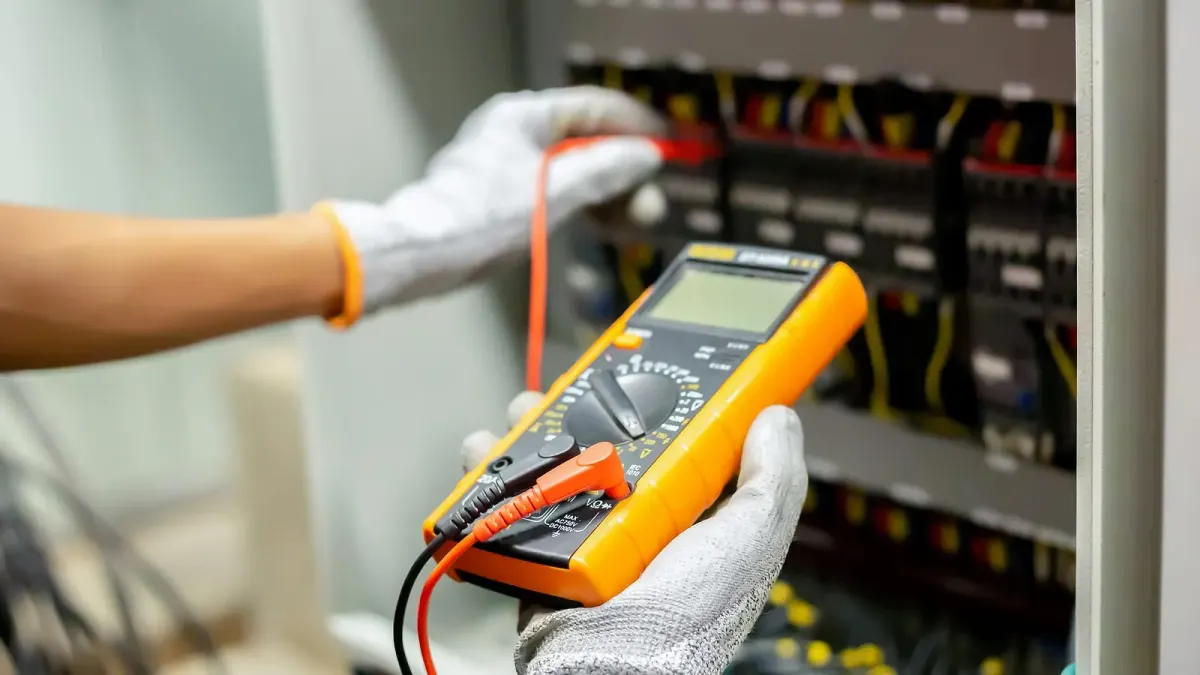
A dead or malfunctioning outlet can disrupt your routine. Instead of hunting for an electrician right away, grab a multimeter, and you may find and fix the problem yourself. Multimeters give quick insights into voltage, wiring issues, and grounding problems. Follow this guide step by step, and if anything feels unsafe or confusing, don’t hesitate to call Titan Plumbing and Electric. We offer same-day emergency electrical services, Monday through Saturday with a dispatcher callback within 5 minutes, to restore power reliably.
What a Multimeter Tells You About an Outlet
A multimeter isn’t just a gadget, it’s a key diagnostic tool. Here’s what you can uncover:
- Live power reading: Confirms whether the outlet is delivering standard voltage (around 120V in the U.S.).
- Circuit continuity: Helps identify tripped breakers or internal wiring faults.
- Grounding status: Checks if your outlet is properly grounded to protect your home.
- Reversed wiring: Detects wiring mistakes that may affect sensitive electronics.
Knowing what’s wrong helps you decide if you can fix it or need a professional. Even subtle issues may cause appliance damage or safety hazards.
Safety First: Preparing to Test
Before testing, set yourself up for safety:
- Clear the area around the outlet.
- Don’t wear rings or jewelry, as metal can conduct electricity.
- Use insulated tools.
- Only hold one multimeter probe at a time to avoid ionic path creation.
- Never bypass manufacturer instructions or safety labels on your outlet.
If you’re unsure or don’t have safety gear, it’s best to call a licensed electrician from Titan Plumbing and Electric for help.
Understanding Outlet Layout and Voltage
Standard outlets have three slots: hot (short blade), neutral (long blade), and grounding (round half-circle). Here’s their function:
- Hot carries power.
- Neutral completes the circuit.
- Ground offers safety in case of faults.
Set your multimeter to the AC voltage setting. Insert the red probe into the hot slot and the black into the neutral. A healthy outlet shows ~110-120V. If nothing appears, a breaker may be off or the circuit may be dead.
How to Test for Proper Grounding
Grounding matters, without it, power surges and shocks become more dangerous. To test, keep red in hot and move the black probe to the ground slot. You should still get around 120V. If you don’t, the outlet may not be properly grounded, which requires professional attention from Titan Plumbing and Electric to avoid electrical risks.
How to Detect Reversed Wiring
Ever thought your outlet might be wired wrong? This is how to check:
- Place the red probe in neutral (long slot) and the black probe in hot (short slot).
- If you get a reading, the wiring is reversed.
Reversed wiring can confuse surge protectors and damage electronics over time. Fortunately, it’s a clear DIY fix or our team can handle it quickly and safely.
Testing Appliance Continuity
Sometimes the outlet works just fine, but the appliance doesn’t. Here’s how you test it:
- Unplug the appliance.
- Switch your multimeter to Ohm (Ω) or continuity mode.
- Touch the probes to the prongs.
If you see around 2Ω or less, the appliance’s wiring is in good shape. Higher resistance? Time for repair or replacement.
Troubleshooting Common Outlet Problems
Based on your readings, here’s what could be going on:
- Zero volts: Likely a tripped breaker or faulty outlet.
- Low voltage (under 110V): Indicates possible wiring or breaker issues.
- No ground reading: Ground wire either loose or absent.
- Reversed polarity: Hot/neutral swapped during wiring.
- Appliance continuity fail: The internal wiring is damaged.
If your findings point to any of these dangers or if you can’t diagnose confidently, Titan Plumbing and Electric is ready to help.
Why DIY Testing Makes Sense and When to Call Us
DIY outlet testing helps you learn about your home’s wiring and possibly fix easy issues. Multimeters are affordable, easy to find, and reusable. That said, if anything feels unclear or dangerous, or if your outlet shows multiple problems, it’s smart to call professionals. Our certified electricians can:
- Safely restore power
- Rewire and re-ground outlets
- Upgrade outlets to GFCI or AFCI protection
- Replace damaged wiring
- Conduct home safety inspections
Your family’s safety and your peace of mind matter most.
Preventive Electrical Care Tips
Once your outlet is back in good shape, here’s how to avoid future issues:
- Regularly test outlets and GFCIs
- Inspect cords for wear or damage
- Avoid overloading power strips
- Invest in surge protectors near electronics
- Schedule an electrical check-up every few years
- Watch out for signs like sparks, flickering, or smells, call us immediately if they appear
Small irregularities now can prevent big headaches later.
When to Call Titan Plumbing and Electric
You’ve done the safety checks, now it’s time to act. Call us if you discover:
- No reading on a breaker-controlled outlet
- No ground detected
- Reversed polarity
- Damage to wires or the outlet structure
- Appliance issues after testing
Our team offers same-day service across Tampa, Monday through Saturday, with a real dispatcher calling you back within 5 minutes to respond fast, diagnose accurately, and fix things right, every time.
Knowing how to use a multimeter helps build confidence with household electrical work, but it comes with risks. Use all safety precautions, and contact Titan Plumbing and Electric if you’re ever unsure. Our licensed, insured electricians bring experience, training, and high-tech tools to protect your home and family. Got outlet issues? Call Titan Plumbing and Electric at 813-933-8010 in Tampa, FL. We offer same-day service, Monday through Saturday, to restore your home’s power.
- Published at August 31, 2022
- Category: Electrical Services
Need help with this?
Talk to a real Tampa dispatcher.
Same-day service, flat-rate pricing, A+ BBB rated since 1994.